


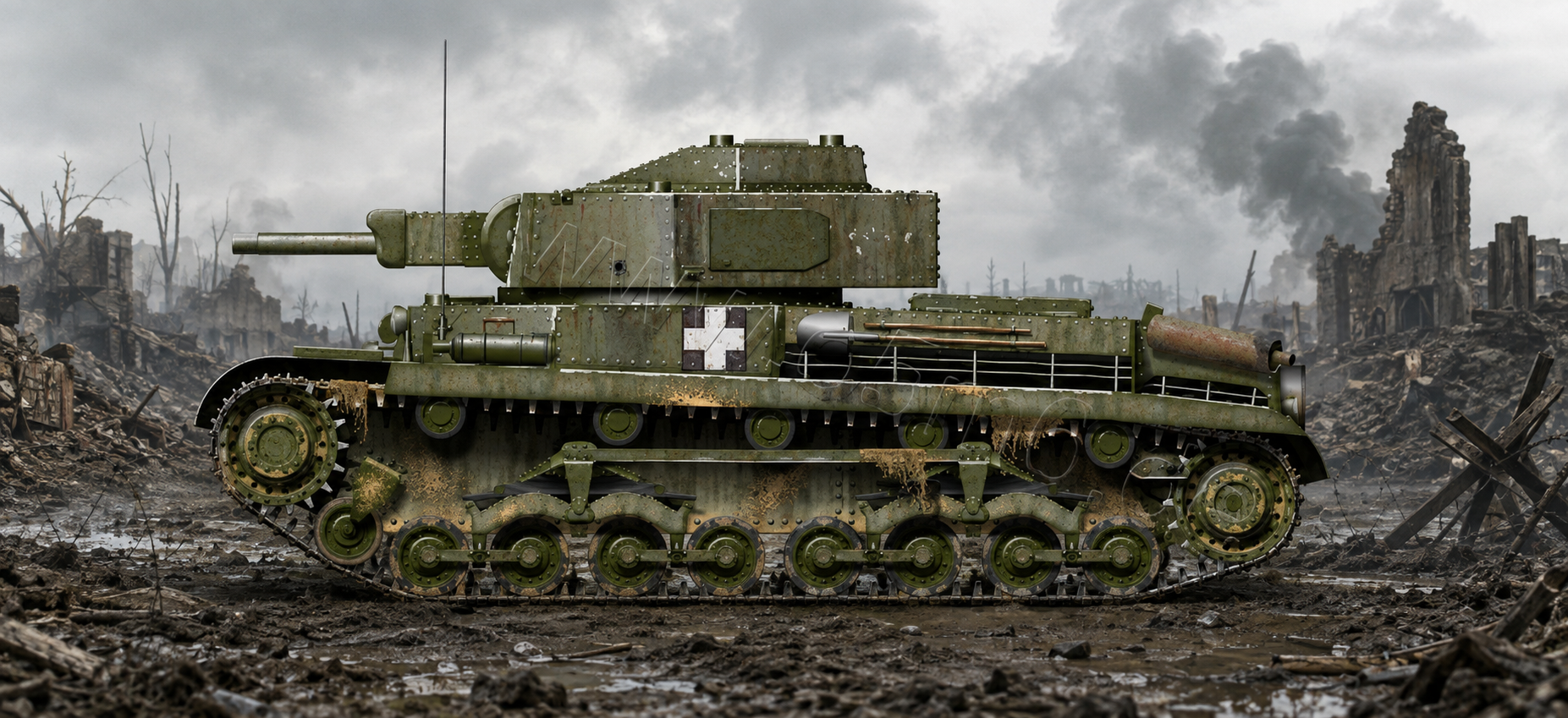

6mm WWII Hungarian (minor ally) tank Late War
6mm WWII Hungarian Armored Vehicle Markings Decal Sheet
This decal sheet provides a selection of World War II Royal Hungarian Army armored-vehicle markings, suitable for recreating Hungarian tanks, assault guns, self-propelled guns, armored cars, and other military vehicles operating from the early war years through 1944–45.
These markings can be applied to vehicles such as the 38M Toldi light tank, 40M and 41M Turán medium tanks, 40M Nimród self-propelled gun, 40/43M Zrínyi II assault howitzer, as well as German-supplied vehicles operated by Hungarian formations.
Historical Background.
Hungarian armored-vehicle identification markings changed considerably during World War II. Earlier vehicles could carry a more elaborate Hungarian national emblem incorporating Hungary's traditional red, white, and green national colors. By approximately 1942, the Royal Hungarian Army increasingly adopted the much more recognizable white cross on a black square. This became one of the principal national recognition markings on Hungarian armored fighting vehicles and was derived from the identification marking already being used by the Royal Hungarian Air Force.
The white cross could appear on the hull sides, turret, rear hull, or engine deck, although its exact position varied between vehicle types and units. Large crosses on the upper surfaces were particularly useful for recognition by friendly aircraft. Period photographs show that crews sometimes deliberately obscured side markings with mud or camouflage because the highly visible white insignia provided enemy anti-tank gunners with an excellent aiming point. Turán tanks of the 2nd Armored Division are documented with their side crosses partially covered while retaining prominent recognition markings on the rear or engine deck.
Like very small white-only decals, these markings can also be difficult to see on the decal sheet when trying to locate and cut them out. The best method is to use the “Black Ink” technique on the back of the sheet. This creates contrast and makes the tiny markings much easier to identify and accurately cut.
For detailed instructions, click here: Black Ink Pro Process.
+tank+Late+War)